 | ||
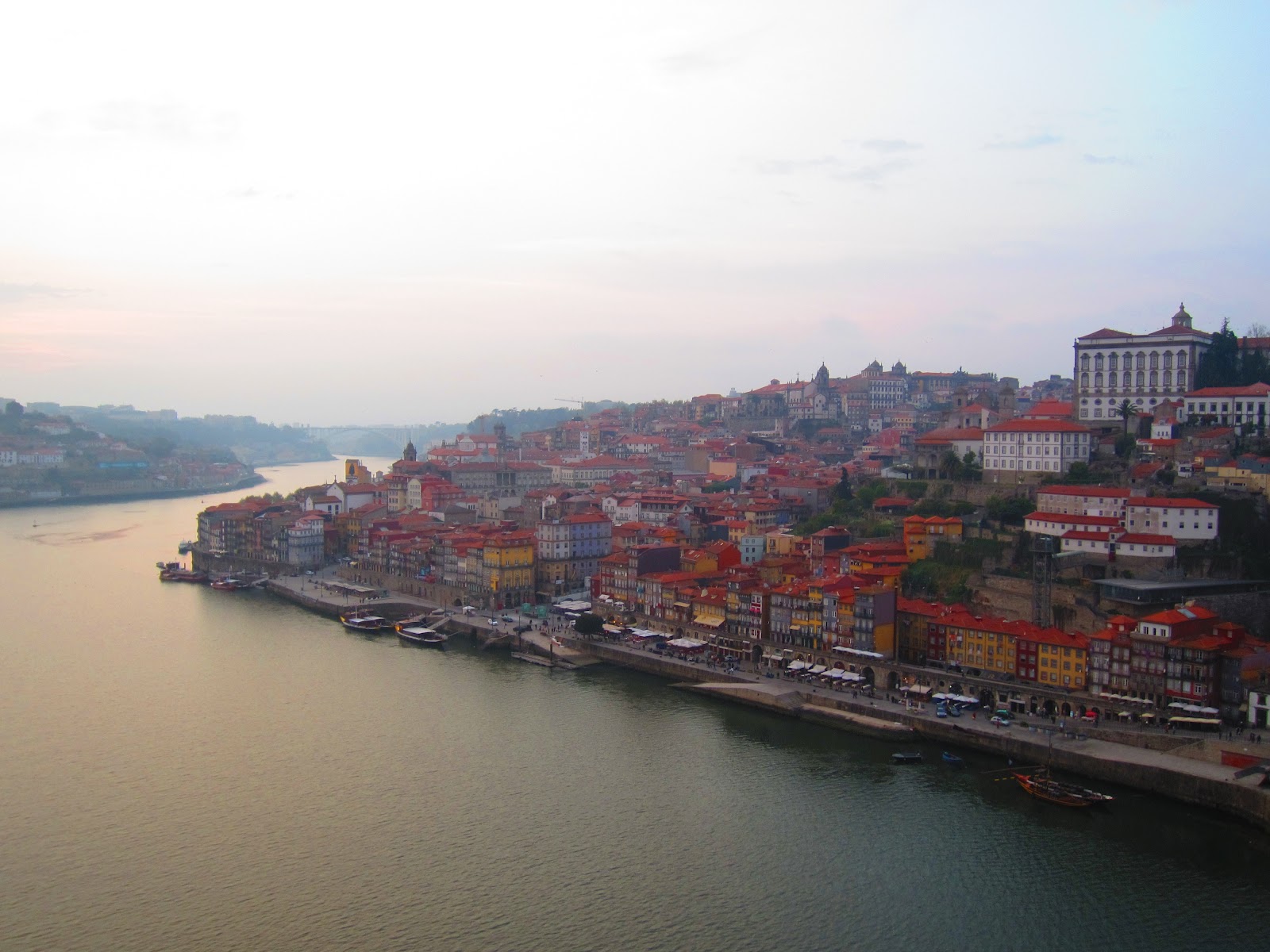
| The view of old town Porto (Ribiera) from across the Douro River |
 |
| Up the hill in the city center, Avenida dos Aliados (Avenue of the Allies), which commemorates Porto's (and Portugal's) alliance with the British in the 1300's. At the "top" (Eastern) end is City Hall. |
 |
| Myself and Stefan meeting up on Avenida dos Aliados |
 |
| The Ribiera district (and the hillside just above it) is a maze of twisted narrow streets. It's also a UNESCO world heritage site. |
 |
| Portugal is FILLED with buildings that are tiled. Here's Cormo church with an awesome blue and white tile its side. Some tell a story, others are just patterned. |
 |
| Cormo church again, this time, I'm trying the color accent feature of the camera that Brian taught me. |
 |
| Clerigos Tower |
 |
| The "wedding cake" Clerigos altar. The church is in an oval shape. |


 |
| For all it's beauty, at least a quarter of the buildings in the town look decayed and abandoned. During the 1980's, the central part of Porto lost 100,000 residents. |
 |
| Down along the Ribiera. It's all touristy now. How great would it have been to witness this when it was an actual working port! |
 |
| Brian being Brian |
 |
| Houses along the Ribiera |
 |
| Luis I Bridge, connecting the north and south banks of Porto. Trams up top, cars down low, pedestrians can use either. |
 |
| View of the Ribiera from the lower span of Luis I Bridge |

 |
| On the south bank is the town of Gaia.....and a GONDOLA! |


 |
| Gaia is known for the "lodges" (warehouses/caves) where the port wine from up the Douro river is brought to sit and age. These buildings are where you come to taste port wine. |
 |
| Porto at sunset.... |
 |
| Porto, looking upriver |


